


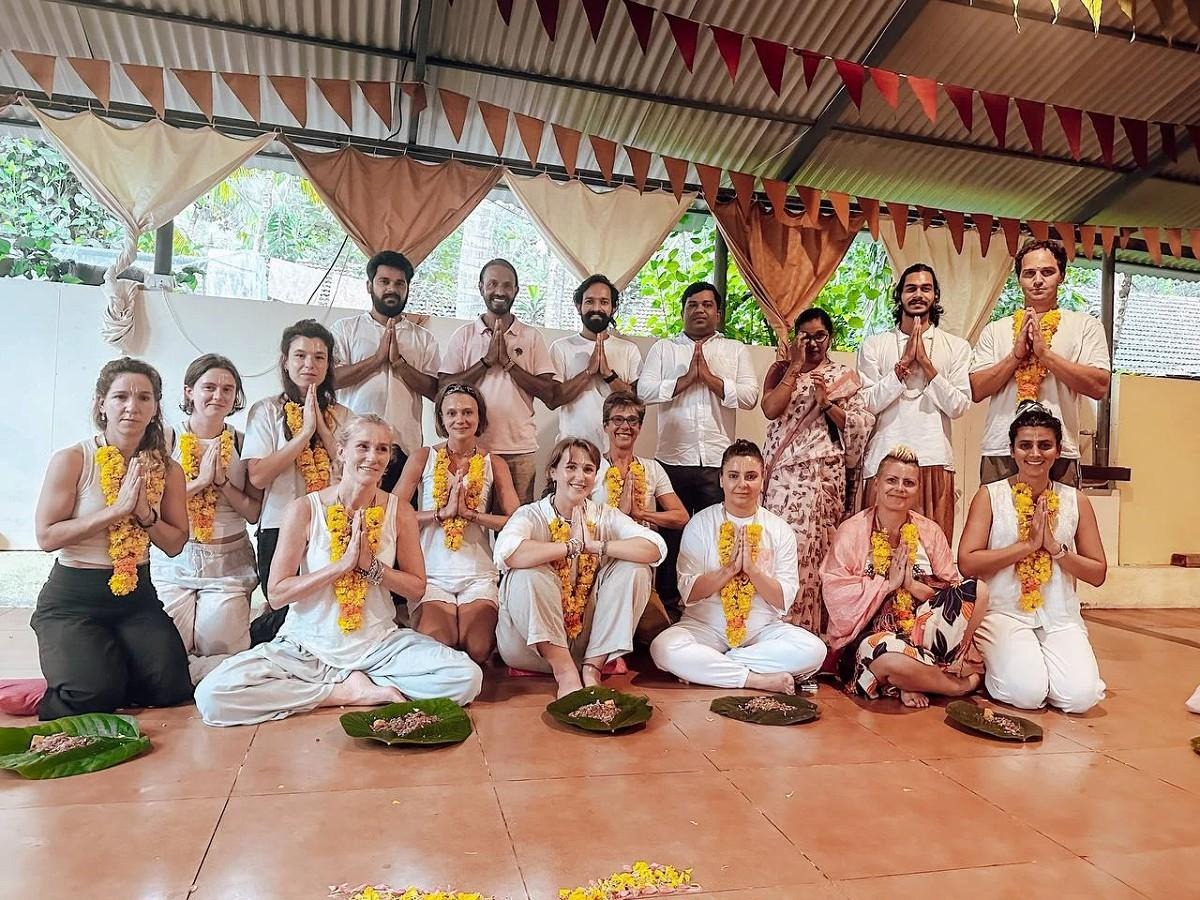
Introduction
India is the birthplace of yoga — and for serious practitioners, there is no better place to deepen your practice, earn a globally recognized certification, and experience the ancient wisdom of yoga in its most authentic form.
With roots stretching back more than 5,000 years, yoga in India is far more than a physical practice. It is a complete philosophy of living, inseparably linked to Ayurveda, spirituality, and the ancient Hindu texts known as the Vedas. Both Ayurveda and yoga share a foundational belief: that true wellbeing arises when the body, mind, and soul exist in harmony.
Choosing to complete your Yoga Teacher Training (YTT) in India means learning yoga where it was born — with access to authentic lineages, experienced masters, and transformative cultural immersion that simply cannot be replicated anywhere else in the world.
Why India Is the Best Place for Yoga Teacher Training
Unmatched Authenticity
Yoga is woven into the fabric of Indian culture. Many of India’s most respected yoga instructors received their knowledge directly from traditional masters through generations of lineage-based teaching. For these yogis, yoga is not a fitness trend — it is a lifelong discipline and a way of being. Training under such teachers gives students a depth of understanding that goes well beyond the physical postures.
Deep Spiritual Exposure
India is one of the most spiritually rich countries in the world. Students who train here are naturally exposed to its spiritual traditions — through temple visits, ashram stays, and daily rituals that form the backdrop of everyday life. This environment accelerates not just physical progress, but inner transformation and self-discovery.
Diverse & Inspiring Learning Environments
India’s extraordinary geographic and cultural diversity means your training environment can be as unique as your goals. Whether you choose the foothills of the Himalayas in Rishikesh, the tropical backwaters of Kerala, or the beachside serenity of Goa, each location offers a completely distinct atmosphere that enriches your practice and broadens your perspective.
Reputable institutes like Rishikul Yogshala, with established centers across multiple locations including Kerala and Goa, offer internationally recognized programs that combine traditional teaching with modern curriculum standards.
Yoga Teacher Training Programs Available in India
India offers structured YTT programs designed for every level — from complete beginners to seasoned practitioners looking to deepen their expertise or expand their teaching credentials.
Standard Program Levels:
- 200-Hour Yoga Teacher Training in India — The foundational certification for aspiring yoga teachers; ideal for beginners and those new to formal training
- 300-Hour Yoga Teacher Training — An advanced program for those who have completed their 200-hour certification and want to deepen their knowledge
- 500-Hour Yoga Teacher Training — A comprehensive combined program covering both foundational and advanced content in one immersive course
What the Curriculum Covers:
A well-structured YTT program in India typically includes balanced instruction across all core disciplines:
| Subject Area | What You’ll Learn |
|---|---|
| Hatha & Ashtanga Yoga | Traditional posture sequences and alignment principles |
| Vinyasa | Dynamic flow-based practice and sequencing |
| Pranayama | Breath control techniques for energy and focus |
| Meditation | Mindfulness, concentration, and contemplative practices |
| Anatomy & Physiology | Body mechanics as they relate to yoga practice |
| Yoga Philosophy | Patanjali’s Yoga Sutras, the Bhagavad Gita, and yogic ethics |
| Teaching Methodology | Class planning, cueing, adjustments, and student management |
Key Benefits of Completing Your Yoga TTC in India
1. Personal Transformation
Training in yoga’s country of origin offers a unique advantage that no Western program can replicate. India’s environment — filled with practicing yogis, ancient temples, meditation retreats, and spiritual teachings — naturally awakens awareness and deepens your understanding of yourself. Students consistently describe their time in India as one of the most transformative experiences of their lives.
2. Affordable, World-Class Training
Yoga teacher training in India costs significantly less than equivalent programs in the United States, Europe, or Australia — even when you factor in international travel and visa expenses. You receive world-class instruction, quality facilities, and cultural immersion at a fraction of the cost of Western alternatives.
3. Globally Recognized Certification
Programs affiliated with Yoga Alliance USA meet international standards recognized by studios and wellness centers around the world. Completing a Yoga Alliance-accredited 200-hour or 300-hour program in India opens doors to teach professionally in virtually any country.
4. Build a Global Network
India attracts yoga students and practitioners from every corner of the world. Training alongside international peers creates lasting friendships and professional connections that can support your teaching career long after graduation — from referrals and collaborations to joint retreats and workshops.
5. Spiritual Growth & Cultural Immersion
India is home to thousands of ancient temples, sacred ashrams, and living spiritual traditions that have drawn seekers from across the globe — including notable figures like Steve Jobs and Bill Gates who visited India seeking wisdom and inspiration. Immersing yourself in this environment adds a dimension to your training that goes far beyond technique, connecting you to yoga’s deepest roots.
How to Choose the Right Yoga School in India
With hundreds of yoga schools operating across India, selecting the right one requires careful research. Here are the most important factors to evaluate:
Yoga Alliance Accreditation Only enroll in programs registered with Yoga Alliance USA (RYS 200, RYS 300, or RYS 500). This accreditation ensures the curriculum meets globally recognized standards and that your certification will be accepted worldwide.
Quality & Experience of Teachers Research the lead teachers’ backgrounds, years of experience, and teaching lineages. The best schools employ certified, experienced instructors with deep personal practice — not just administrative credentials.
Student Support & Living Facilities A good training environment goes beyond the classroom. Look for schools that provide comfortable accommodation, nutritious meals, and a supportive community atmosphere. Cultural excursions, kirtan evenings, and group activities significantly enrich the overall experience.
Curriculum Depth & Balance A high-quality YTT program should offer a balanced curriculum that covers physical practice, anatomy, philosophy, pranayama, meditation, and practical teaching skills. Avoid programs that are heavily weighted toward physical postures at the expense of yoga’s broader dimensions.
Reviews & Alumni Testimonials Read independent reviews on platforms like Google, Facebook, or Yoga Trail. Authentic student testimonials give you a realistic picture of what to expect from both the training and the school’s community.
Top Locations for Yoga Teacher Training in India
Rishikesh, Uttarakhand Known as the “Yoga Capital of the World,” Rishikesh sits at the foothills of the Himalayas along the sacred Ganges River. It is the most popular destination for international yoga students, offering a deeply spiritual atmosphere and hundreds of established yoga schools.
Kerala Famous for its lush tropical landscapes, Ayurvedic heritage, and tranquil backwaters, Kerala offers a uniquely restorative environment for yoga training — with a strong emphasis on the connection between yoga and Ayurveda.
Goa For students who prefer a lighter, beach-side atmosphere, Goa combines quality yoga training with a relaxed coastal environment. It is especially popular for shorter immersive programs and retreats.
Mysore, Karnataka The spiritual home of Ashtanga Yoga, Mysore is the destination of choice for serious Ashtanga practitioners seeking authentic Mysore-style instruction.
Frequently Asked Questions (FAQ)
1. Is India the best country for yoga teacher training? Yes — India is widely regarded as the gold standard for yoga teacher training due to its authentic lineages, experienced masters, spiritual environment, and affordable program costs compared to Western alternatives.
2. How long does yoga teacher training in India take? The 200-hour program typically takes 3–4 weeks of intensive training. The 300-hour program takes approximately 4–5 weeks, while the full 500-hour program can run 6–8 weeks depending on the school.
3. Is yoga teacher training in India recognized internationally? Yes, provided the school is registered with Yoga Alliance USA. A Yoga Alliance-accredited certification from India is recognized by yoga studios and wellness centers worldwide.
4. How much does yoga teacher training in India cost? Costs vary by location and school, but a 200-hour YTT program in India typically ranges from $800 to $2,500 USD including accommodation and meals — significantly more affordable than comparable programs in the West.
5. Do I need prior yoga experience to join a 200-hour YTT in India? Most 200-hour programs welcome students with a basic personal yoga practice. You do not need to be an advanced practitioner, but some familiarity with yoga postures is recommended.
Conclusion
India remains the world’s most powerful destination for authentic, transformative yoga teacher training. Its unbroken spiritual traditions, experienced master teachers, diverse training environments, and affordable programs make it the natural first choice for anyone serious about building a meaningful yoga practice or launching a global teaching career.
Whether you’re drawn to the Himalayan energy of Rishikesh, the Ayurvedic richness of Kerala, or the coastal calm of Goa, India will surprise you, challenge you, and ultimately transform you — in ways that extend far beyond the yoga mat.
Explore all articles: Click here