


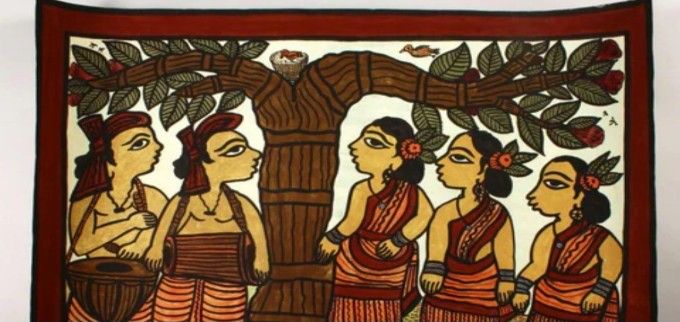
Jharkhand is a place where nature and culture live together. It is a kind of place which has dense forests, hills, and soil which is rich in minerals. Every painting or sculpture that is created here is similar to a story that is living in nature. The crafts of this place are a reflection of how tribal the soul of the place is because there are both age-old myths and folklore which can be created into real forms of culture and this is something which continues to make the customers happy. Roots in the Tribal Imagination Jharkhand has a cultural identity which is deeply combined to the communities such as the Munda community, the Araun community, and the Ho community.
Tradition
These traditions are based on animism, nature worship, and oral storytelling. All the rituals and dance which you see in these communities are always close to the earth, the forest, and the nature which has divine spirits which are still believed to be living. Although these myths are centered around creation stories and it is about how the spirits of the forest work, they have found a kind of expression in the craft work. Unlike mainstream Indian art which often showcases gods and kings, Jharkhand’s tribal art is about how the everyday life of the people are, how they harvest things, and the wild animals. When we speak about Dokra art, it is a kind of metal that is an example of myth. It is among Jharkhand’s most renowned crafts and it is more than 4000 years old and it is like a form of metal casting which is done with the help of a lost wax technique. This is a kind of craft which is practiced by the Malhar and Karmakar artisans and they turn raw brass and bronze into the best and most beautiful mesmerizing figures. You will often spot that the figures have been created in a very stylized way with elongated limbs and very delicate detailing representing the spiritual essence rather than any sort of physical perfection.
Sohrai and Khovar
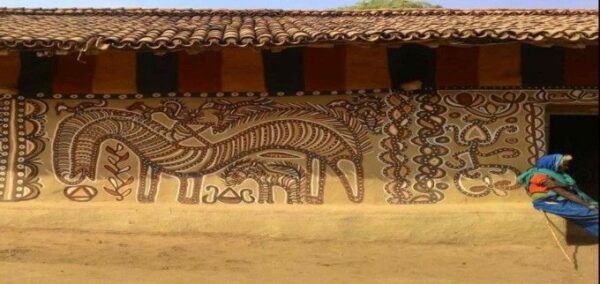
There are many villages like Sohrai and Khovar in Jharkhand which are supposed to speak. Did you know that in the villages of Hazaribagh there are certain walls of tribal homes that are supposed to be canvases of myths? Among these are the Sohrai painting which is a kind of mural style traditional painting which was practiced by women of the Unao tribe. These paintings are often created during the harvest festivals. It celebrates fertility and prosperity in the family. It is always done with the help of natural pigments that have been derived from clay and minerals. And women paint scenes of their everyday life.
Everyday Life
Sometimes they paint about the divine symbols on mud walls. Each stroke that they make is guided by ancestral memory rather than any kind of formal training. On the other hand, Khovar paintings are always made in Jharkhand at the time of wedding. There are certain motifs like fish, peacock, and trees which symbolize continuity. Always mothers of Jharkhand teach their daughters these types of crafts. In recent years, these paintings have transcended from walls of homes to find space on different kinds of materials like paper, cloth and even international art exhibitions. Yet, their spirit remains the same. It is like a connection between the myth and material world. Other than that, there are things which are created from stone and bamboo as well because they are prevalent and found in a good amount in Jharkhand. There are artisans in Dumka in Ranchi who create decorative idols that have been inspired by the spirits of nature. Many of these are found in tribal festivals and dances where mythic tales are performed through the art of costume and rhythm.
Author
Shreeja Mukherjee
Explore all articles: Click here