


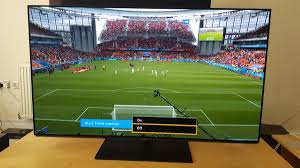
Introduction of Intelligent frame creation
Are you curious about Panasonic displays’ Intelligent frame creation? Recently, I’ve been experimenting with AI features, and I got stuck on this one. An important problem that many people encounter while motion blurs occurs when high-speed information, like sports, is streamed.
As a tech enthusiast, I have tested it to see its influence, and I can assure you that it is really helpful when this problem occurs. And this is the main motivation for writing this piece of material.
The term “intelligent frame creation” (IFC) has gained popularity among both casual viewers and tech specialists. However, what does it really mean? IFC basically creates extra frames in between existing ones to improve motion clarity. Fast-paced action scenes may become more fluid and visually appealing as a result.
What is intelligent frame creation?
Panasonic’s motion interpolation technology is called intelligent frame creation (IFC). By generating and fading in extra frames, it seeks to lessen the blur effects you encounter when streaming media.
Advanced
TV creates the false frames by utilizing the shift in motion between frames. And the purpose of doing this is to improve the smoothness of the movement. The better the outcome, particularly when it comes to sports-related content, the faster the video’s frame rate.
However, FX frequently called this phenomenon—which may make movies appear abnormally smooth—the “soap opera effect.” If higher-quality phase findings, like those from IFC Pro, are required, users can disable the function and change the intensity.
What Is the Process of Intelligent frame creation?
In order to identify motion, intelligent frame creation alyzes the incoming video frames. This aids in the creation of new intermediate and AI-generated video frames. In order to increase the frame rate, it also produces gaps between video frames.
This eliminates motion blur, improving the movement’s fluidity and realism. Additionally, faster-paced content like sports exhibits a phenomenon called the “soap opera effect,” which some viewers may find strange.
Interpolation of AI Frames
It uses AI techniques to interpolate frames. Smoothing out and filling in the gaps between original videos is another way to experience this. The neural networks have seen predicting natural movements, and this process produces smooth motion.
It is tested by converting 30 frames per second to 60 frames per second. This improvement lessens blurring and juddering. The GPU is where the computing takes place, giving you the fastest possible speed.
Hardware Needs for Intelligent frame creation
The television visual processor is responsible for Intelligent frame creation (IFC). This procedure involves the creation and insertion of fictitious computer-generated frames into the video that you are watching.
In order to replace the missing processions, the TV’s processor will go through the motion vectors of the source content and create in-between frames utilizing intricate software processes.
Procedure for Activation
Turn it on under Display in Panasonic Settings. To activate exceptional performance, just turn it on for video features. On the other hand, in certain displays and configurations, these functions are integrated with automatic AI options and function independently. Control is simple and straightforward to use thanks to the options.
In order to have the best possible experience, I have changed the quality levels. My needs are met by this adjustment, and the procedure is easy to utilize.
Advantages of using Intelligent frame creation:
By learning as much as you can about intelligent frame construction, you can achieve the following advantages:
Smoother Playback of Videos
For low-fps content, it provides buttery-smooth playing. You don’t have to stammer to appreciate movies. Its fluid motion improves vision, and its smoothness increases immersion. I’ve streamed realistic-looking sports footage. The benefit of this update is that it allows for casual viewing and revitalizes older media.
Enhanced Gaming Experience
It improves graphics and input lag for online gaming. Older games with higher frame rates are still playable. The graphic clarity increases enjoyment, and this enhancement makes games responsive.
Reports of users have experiences of playing games and they feel completely contemporary. Libraries benefit from this feature, which unites generations.
Disadvantages of Intelligent frame creation:
Even though it has many advantages, there could always be disadvantages. The following are a few of the most prevalent ones you should be aware of:
Problems with Artifacts
Visual artifacts may be introduced using interpolation. Additionally, I’ve seen some blurring in quick sequences. Realism is disturbed by this bug, and the mistakes differ depending on the topic.
One can change its settings to make them less noticeable. The output is improved by this adjustment, and the artifacts are a frequent complaint.
Limitations on Compatibility
Not every software has complete support for it. I’ve observed that browsers don’t have it, which restricts its application. Applications are limited by this constraint, and support is changing.
For wider compatibility, I have also been waiting for upgrades. The restrictions become transient as a result of this patience.
When Should Intelligent frame creation Be Used or Disabled?
I’ve already covered every benefit and drawback of utilizing it. Let’s talk about when to enable it and when not to:
Applications of Enabling
Turn it on for videos with a low frame rate. I’ve seen modern-looking classics. The improvements are suitable for streaming, and this use brings back older content.
For smooth action, you can also activate it for sports. Excitement is increased in this scenario, which is obviously advantageous for casual viewing.
Motives for Disabling–
Turn off high-end content:
To prevent overprocessing, I’ve turned it off. As always, the natural look is favored, and this option maintains original quality.
To cut down on latency, I have turned it off during gaming. This change makes the control more user-driven and increases responsiveness.
Conclusion:
It has also been researching the cutting-edge technology known as Intelligent frame creation (IFC). Additionally, Panasonic, one of the most genuine display manufacturers, designed it. It improves the way videos are played on TVs by producing more computer-generated frames. Even yet, it has a lot of advantages, such better graphics and energy efficiency. On the other hand, users should be conscious of potential disadvantages such artifact problems and performance overhead. All things considered, using Intelligent frame creation can improve your watching experience, so both casual users and tech enthusiasts should give it a try.